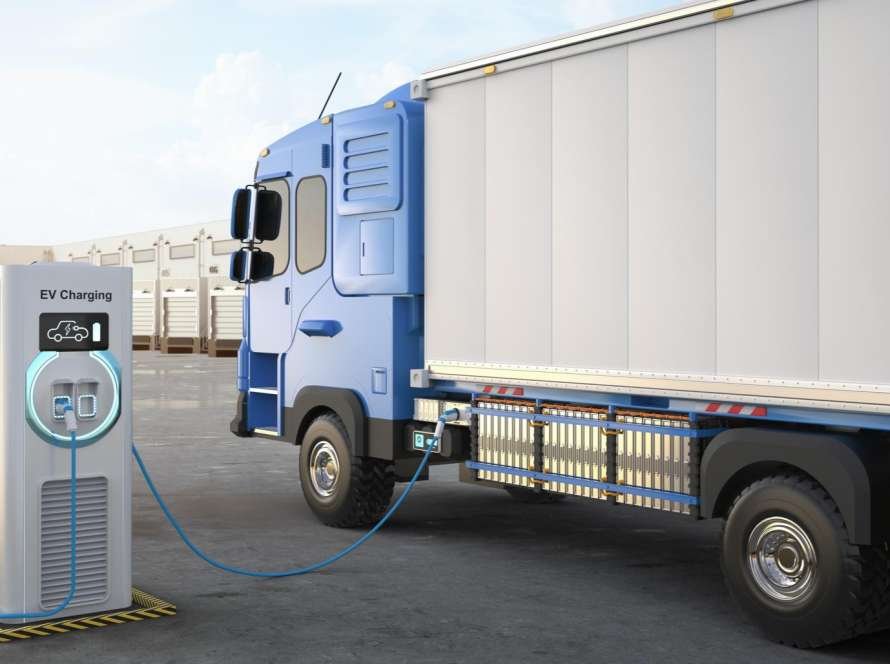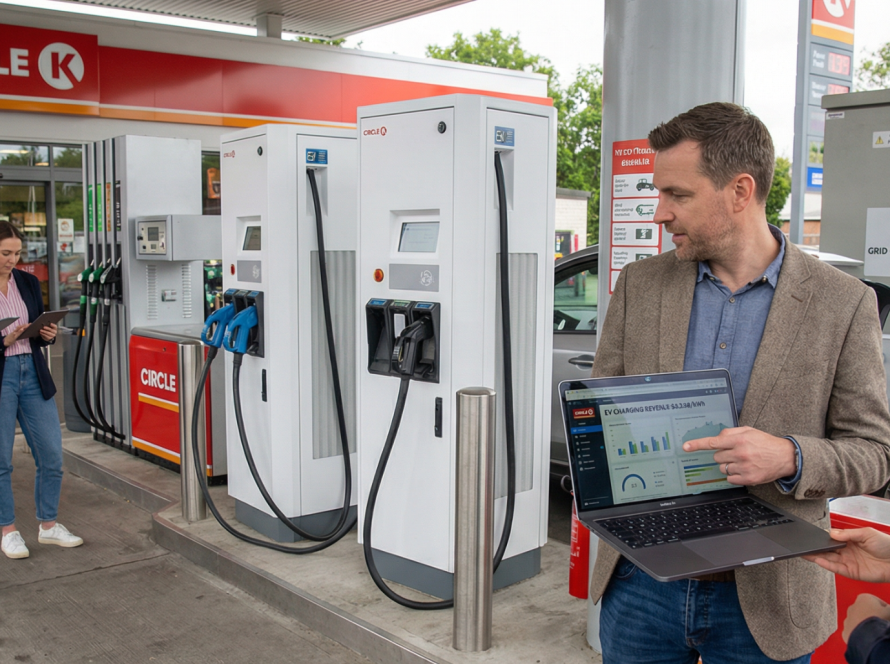
Electric vehicles are reshaping global transportation, yet the infrastructure behind them is struggling to keep pace. The shift toward electric mobility is no longer a distant vision; it is underway. Governments, automakers, and consumers are racing toward an electrified future, but progress will depend on how well the charging ecosystem evolves.
EVs promise cleaner transport and lower emissions, but adoption still faces multiple roadblocks. From grid strain to cybersecurity, the obstacles are as vast as they are urgent.
1. Limited Grid Capacity and Load Management
The electrical grid’s limited ability to meet rising demand remains one of the biggest EV charging challenges. Studies show EV charging could increase total U.S. electricity demand from 0.2 percent today to as high as 23 percent by 2050. Without proper upgrades, peak-hour charging may cause voltage drops, outages, and system instability.
Innovative solutions are already emerging. Battery-storage systems, such as Wallbox’s combined charging-and-storage platforms, balance grid load by storing power during off-peak hours. Vehicle-to-Grid (V2G) technology from Nissan and Enel X allows EVs to send stored electricity back to the grid, offsetting as much as 25 percent of Europe’s projected grid-upgrade costs.
2. Geographic and Demographic Disparities
Charging infrastructure is not evenly distributed. Urban areas and affluent neighborhoods enjoy robust coverage, while rural and low-income regions often lack access. This imbalance limits vehicle ownership and slows national adoption rates.
Governments are responding. The U.S. Department of Transportation’s Rural EV Charging Program and India’s FAME and EESL initiatives promote equitable network deployment. In addition, mobile and portable charging solutions are bridging short-term gaps until permanent stations are built.
3. Charging Compatibility Problems
A lack of standardization has long complicated the EV ecosystem. With multiple plug types such as CCS, CHAdeMO, and Tesla’s Supercharger, drivers frequently encounter uncertainty about whether a charger will work with their vehicle.
This fragmentation discourages users and leads to underused stations. The move toward common standards is gathering momentum. The North American Charging Standard (NACS J3400) is rapidly emerging as the industry norm, while Tesla has opened its Supercharger network to other manufacturers through universal adapters.
4. Fixing Unreliable EV Chargers
Reliability is another critical concern. Although many networks claim 95 to 99 percent uptime, real-world data tells a different story. ChargerHelp’s 2025 report shows that the first-time success rate for charging sessions averages only 71 percent worldwide.
This inconsistency frustrates drivers and erodes trust in public networks. To improve reliability, companies are investing in better hardware and smarter maintenance systems. Tesla’s Supercharger network, which handles more than 40 million sessions each year, demonstrates how data analytics and predictive service can sustain uptime above 97 percent.
Governments are introducing minimum-performance rules as well. The U.S. now mandates at least 97 percent annual uptime, while the EU targets 98 to 99 percent. Some innovators, like NIO, are even bypassing charging entirely with battery-swapping stations that deliver full energy replacement in minutes.
5. High Infrastructure Investment Costs
The high upfront expense of deploying charging stations remains a formidable barrier. In North America, installing a 60 to 120 kW fast charger can cost 10,000 to 30,000 dollars for equipment alone, and European costs are higher because of labor and regulatory factors.
These costs delay profitability and discourage rapid expansion. To counter this, public-private partnerships and new financing models are gaining traction. More than 1.2 trillion dollars has already been committed globally to EV and battery manufacturing, largely concentrated in the U.S., Europe, and China.
Manufacturers are also driving costs down. Chinese companies such as Olink now supply modular DC chargers that can be upgraded later, reducing long-term replacement expenses.
6. Data Privacy and Cybersecurity Risks
As charging networks become digitally connected, they are also becoming cybersecurity targets. These systems link vehicles, payment gateways, and national power grids, creating multiple points of vulnerability.
A data breach in 2024 exposed 116,000 records from global EV networks, underscoring the potential impact of cyberattacks on both users and utilities.
To strengthen defenses, the ISO 15118 standard now requires Transport Layer Security (TLS) encryption to protect communication between chargers and vehicles. Most major manufacturers also comply with global frameworks such as SOC 2 and ANSI/UL 2900-1 to safeguard data integrity across regions.
7. Integrating Smart Chargers With the Grid
The future of electric mobility depends on how seamlessly chargers integrate with existing energy systems. Poor coordination already accounts for more than half of failed charging sessions worldwide.
Developed markets face data and communication issues, while emerging economies struggle with weak grids and slower digital adoption.
Smart-grid integration offers a path forward. Advanced energy-management software now balances demand in real time, supported by standards like IEEE 2030.5 that enable continuous communication among EVs, chargers, and utilities. Nations are also diversifying supply chains and harmonizing cybersecurity rules to ensure resilience and interoperability.