Electric trucking is entering its decisive decade. After years of pilot projects and incremental progress, the sector now stands at a true inflection point. Global forecasts indicate a 42 percent compound annual growth rate in medium and heavy-duty electric truck adoption over the next ten years. This surge represents one of the most significant transformations in modern logistics, driven by three converging forces: falling battery costs, new business models, and the coordinated buildout of charging infrastructure.
The implications reach far beyond transportation. They touch every aspect of energy, manufacturing, and digital infrastructure investment worldwide.
Why Infrastructure Coordination Is the Critical Link
Electric trucks require more than powerful batteries. They depend on a high-capacity, intelligently distributed charging network that keeps freight moving efficiently across long routes. Without coordination, isolated charging deployments create operational bottlenecks and stranded assets.
In the United States, analysts estimate the need for approximately 57,000 DC fast-charging ports and 141,000 AC Level 2 ports by 2035 to support medium and heavy-duty fleets. The resulting 4.6 billion dollar investment opportunity will be concentrated along major freight corridors and metropolitan hubs.
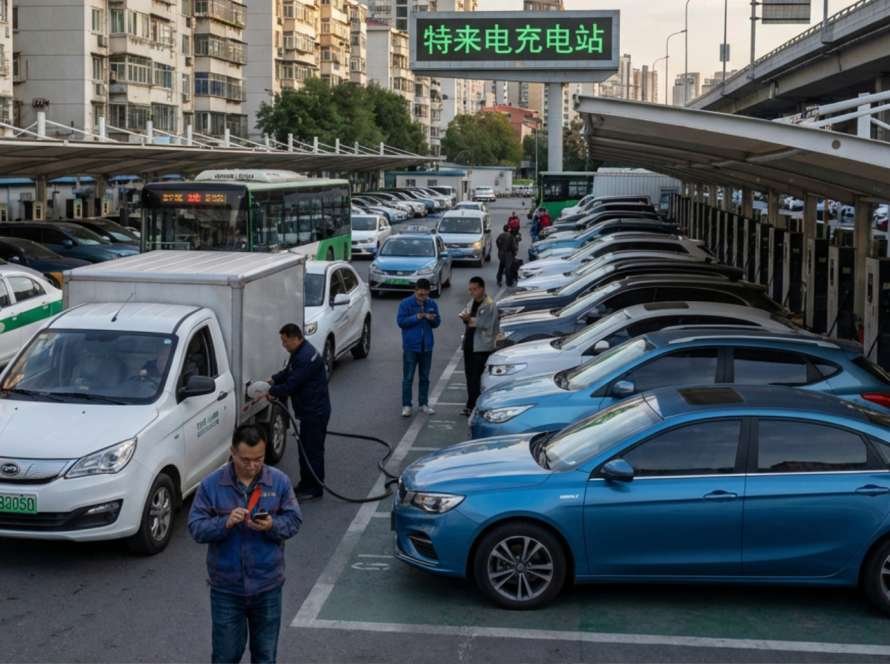
Globally, similar numbers emerge. The European Union’s Alternative Fuels Infrastructure Regulation targets transcontinental coverage by 2030, while China’s Blue Sky Logistics Plan already counts more than 300 high-power freight-charging depots. The message is clear: economies that coordinate public and private investment in charging infrastructure will dominate the next era of clean logistics.
Phased Electrification: From Local Fleets to Long-Haul Corridors
The electrification journey begins where it is easiest to control costs and operations: short-haul and regional fleets. By 2035, roughly 15 percent of U.S. short-haul trucking is expected to be electric, climbing to over 50 percent by 2050. These fleets benefit from predictable routes, return-to-base patterns, and existing depot infrastructure where behind-the-fence charging is most cost-effective.
Long-distance trucking introduces new complexity. It requires megawatt-class chargers capable of replenishing massive batteries in less than an hour. By 2040, more than 12,000 megawatt-level charging ports will be required in the U.S. alone.
Geography matters. The West Coast, particularly California’s I-5 corridor, will electrify first, followed by the Eastern Seaboard, Midwest, and Texas. In Europe, the Rhine-Alpine and Scandinavian corridors lead the way, while in China, coastal provinces are piloting expressway electrification zones. Together, these patterns illustrate how coordinated planning turns regional pilots into continental systems.
Business Models Evolving With Technology
As infrastructure expands, business models are evolving to align cost, access, and scalability.
Depot Charging Dominance. Fleet operators increasingly favor depot charging for vehicles that return to base daily. It offers predictable scheduling, lower installation costs, and easier grid integration.
Public Charging Expansion. Public, high-capacity networks will complement depots as fleets diversify. Direct medium-voltage DC systems, bypassing traditional transformers, can cut energy costs per mile by up to 82 percent compared with diesel.
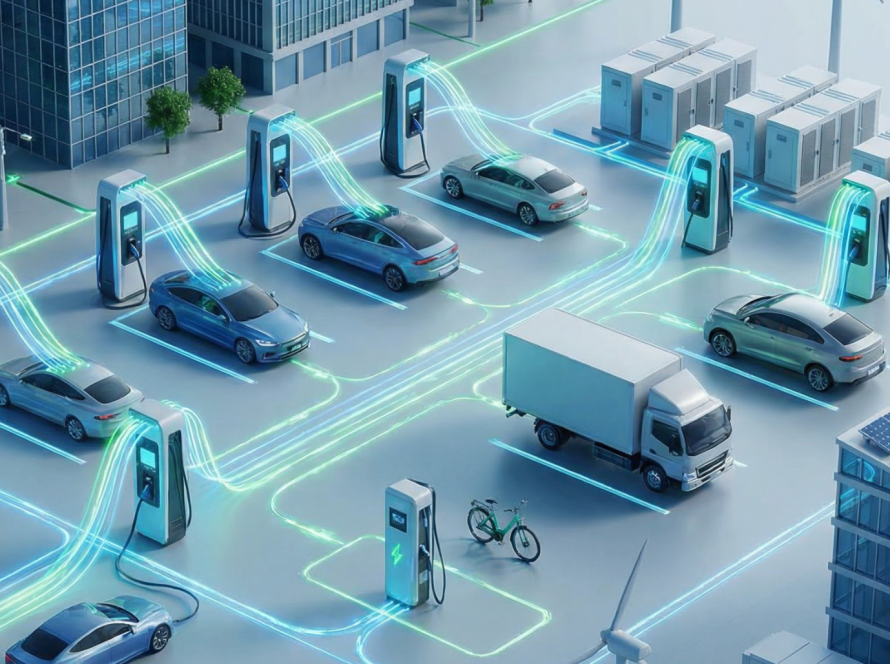
Hybrid Solutions. Where grid connections are limited, charging hubs will integrate solar generation, battery energy storage systems, and intelligent load management. These modular designs reduce peak-demand charges and extend electrification into regions with weaker grids.
Globally, such flexibility is redefining logistics real estate. Warehouses and truck stops are becoming energy nodes where vehicles, renewables, and data converge to create new sources of efficiency and revenue.
Economics: The Tipping Point Has Arrived
The economics of electric trucking are improving faster than most analysts expected.
High-Mileage Class 8 Trucks: Achieve cost parity with diesel in as little as four years of operation and deliver total ownership costs up to 13 percent lower by year ten.
Low-Mileage Fleets: Reach parity by the tenth year, driven by steady energy-cost savings and lower maintenance requirements.
Autonomous Synergy: Autonomous electric trucks, capable of doubling daily mileage while eliminating driver costs, could accelerate payback periods dramatically once regulations mature.
When viewed across the total cost of ownership, electric trucking becomes less a sustainability gesture and more a long-term profitability strategy.
Global Parallels: Lessons From Early Leaders
Europe: Coordinated planning between governments and logistics firms has created dense high-power networks along trans-European corridors. Companies such as Daimler Truck and Volvo are partnering under the Milence joint venture to deploy thousands of chargers across 25 countries by 2030.
China: Through aggressive policy alignment, China leads in depot electrification. Over 90 percent of its electric freight fleet uses company-owned charging infrastructure supported by smart-grid integration and renewable energy co-location.
North America: Public-private initiatives like the West Coast Clean Transit Corridor are laying the groundwork for coast-to-coast electrification, linking utility planning, freight data, and infrastructure incentives.
These case studies show that collaboration among utilities, manufacturers, and policymakers is the foundation of scalable infrastructure.
Opportunities for Business and Investors
The race to build electric trucking infrastructure is creating new investment classes.
Energy and Utility Providers: Can unlock new revenue through demand-response services and wholesale electricity supply agreements.
Real Estate Developers: Gain from converting logistics hubs into dual-purpose energy centers.
Technology Companies: Benefit from data analytics, load balancing, and smart-grid solutions that enhance efficiency.
Fleet Operators: Strengthen margins through predictable energy costs and lower maintenance downtime.
Each player in the ecosystem has a stake in ensuring that charging infrastructure keeps pace with vehicle deployment. Coordinated investment will determine who leads and who lags in the coming logistics transformation.
From Infrastructure to Competitive Advantage
Electric trucking infrastructure is not just an enabler of sustainability. It is the backbone of next-generation logistics competitiveness. The nations and companies that integrate energy, technology, and transportation planning will shape global freight patterns for decades.
The challenge is immense, but so is the opportunity. A coordinated, forward-looking approach can transform a fragmented buildout into a global network that powers cleaner air, lower costs, and stronger supply chains. For businesses and investors, the time to act is now.