As governments worldwide race to accelerate electric vehicle adoption, infrastructure-not vehicle availability-is emerging as the decisive battleground. Malaysia’s latest update on its EV charging rollout marks more than a national progress report; it represents a strategic inflection point with global implications for how EV ecosystems must be built, funded, and scaled.
By the end of 2025, Malaysia had installed 5,624 public EV chargers, achieving 56% of its national target. Yet the real impact lies not in the headline number, but in the deliberate overperformance of DC fast charging infrastructure, a move that reflects a broader global recalibration underway across electric mobility markets.
Why Malaysia’s Charging Strategy Matters Globally
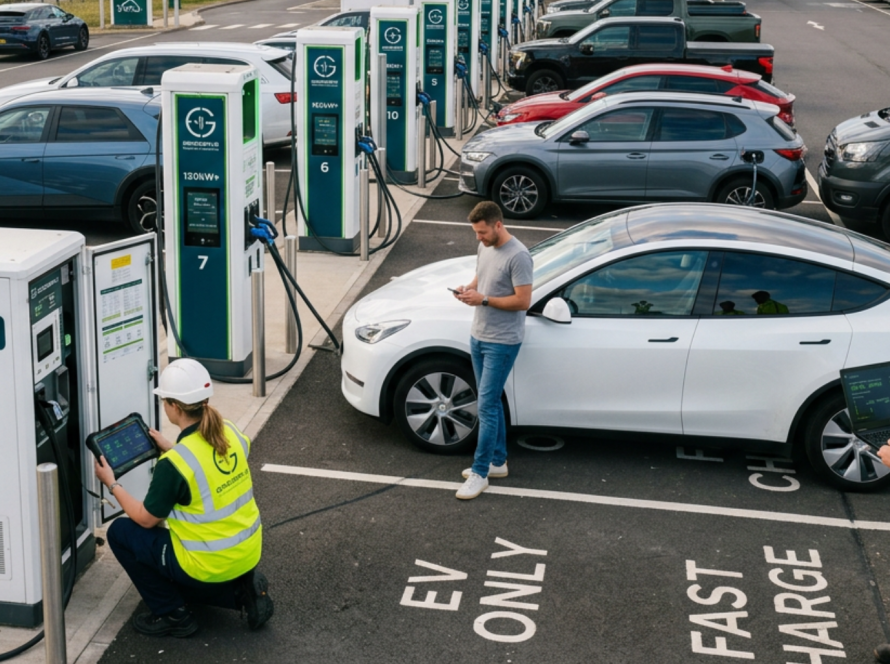
Malaysia exceeded its DC fast charger deployment target by 28%, installing 1,923 fast chargers against a goal of 1,500. In contrast, AC charger deployment lagged expectations.
This outcome validates a lesson now echoing across Europe, North America, and Asia-Pacific:
EV adoption scales when charging speed reduces behavioural friction-not when charger counts increase on paper.
For global automakers and infrastructure investors, this shift reinforces a critical reality: consumer trust in EVs is built on time certainty, especially for intercity travel, fleet operations, and first-time buyers.
Fast Charging as a Confidence Multiplier
Malaysia’s policy leadership openly acknowledged that charging speed is the primary driver of EV acceptance, even when DC fast charging costs are higher.
This mirrors trends seen in:
- U.S. interstate fast-charging corridors
- Europe’s ultra-fast motorway networks
- China’s high-density urban fast-charging hubs
By prioritizing fast charging ahead of full market maturity, Malaysia is aligning with the infrastructure models of EV-leading economies-sending a signal to emerging markets that speed-first infrastructure is no longer optional.
A Global Case Study in Charging Economics Transparency
One of the most globally relevant aspects of Malaysia’s approach is its transparent communication on charging economics.
Public DC fast charging costs (~RM90 per full charge) were clearly contrasted with significantly cheaper home charging (~RM13–RM34). Rather than obscuring the price gap, policymakers framed it as a time-value trade-off-a narrative increasingly essential for global EV market credibility.
This transparency strengthens:
- Consumer trust
- Policy legitimacy
- Investor confidence
Globally, markets that fail to explain charging economics risk slowing EV adoption through misinformation and scepticism.
Early-Stage Market Dynamics, Globally Familiar
With approximately 45,000 EVs currently on Malaysian roads, the market remains in its early adoption phase-mirroring where many countries outside China, the U.S., and Western Europe stand today.
Limited competition among charging providers has resulted in higher prices, a phenomenon universally observed in early EV markets. However, Malaysia’s leadership recognizes that:
Infrastructure pricing normalizes only after utilization scales.
This reinforces a global truth for policymakers: charging networks must be allowed to mature organically, supported by demand growth rather than prematurely regulated into price compression.
Corridor-Based Deployment: A Global Infrastructure Playbook
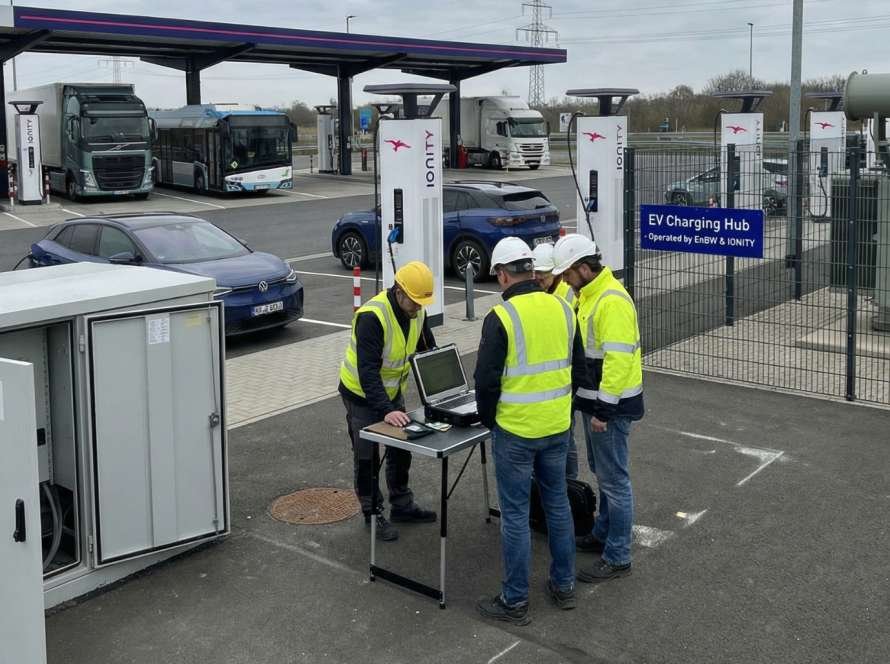
Malaysia’s measured rollout of high-capacity DC chargers along key travel corridors-while resisting over deployment in low-demand areas-demonstrates infrastructure discipline that many markets struggle to maintain.
This approach offers a replicable global model:
- Demand-led expansion
- High-capacity installations where utilization justifies cost
- Long-term operational sustainability over political optics
For emerging EV economies, this strategy reduces stranded assets and strengthens investor returns.
What This Means for the Global EV Industry
Malaysia’s EV charging strategy underscores a broader global transition now underway:
- From charger quantity to charging quality
- From subsidy-led adoption to infrastructure-led confidence
- From speculative buildouts to demand-aligned execution
Fast charging is becoming the currency of EV trust, while home charging economics are emerging as the backbone of mass-market adoption.
Read about: How China Built the World’s Largest EV Charging Network
Executive Takeaway: The Global Signal Is Clear
For global CEOs, investors, and policymakers, Malaysia’s progress delivers three decisive insights:
- Fast charging accelerates EV adoption faster than vehicle incentives alone
- Consumer transparency builds trust faster than regulatory mandates
- Infrastructure must scale with usage-not ahead of it
Markets that internalize these principles will move from EV pilots to EV permanence faster than those that don’t.