China’s electric vehicle (EV) charging network has expanded at a remarkable pace, reinforcing the country’s position as the global leader in electric mobility. As of the end of November 2025, the number of EV charging points in China exceeded 19.32 million, a year-on-year increase of 52%, according to official data from the National Energy Administration.
This rapid growth in EV charging infrastructure reflects a coordinated national strategy to support mass EV adoption, reduce range anxiety, and build a comprehensive, nationwide charging network that can keep pace with surging vehicle sales.
Breakdown of Charging Facilities
The 19.32 million charging points are divided into two main categories:
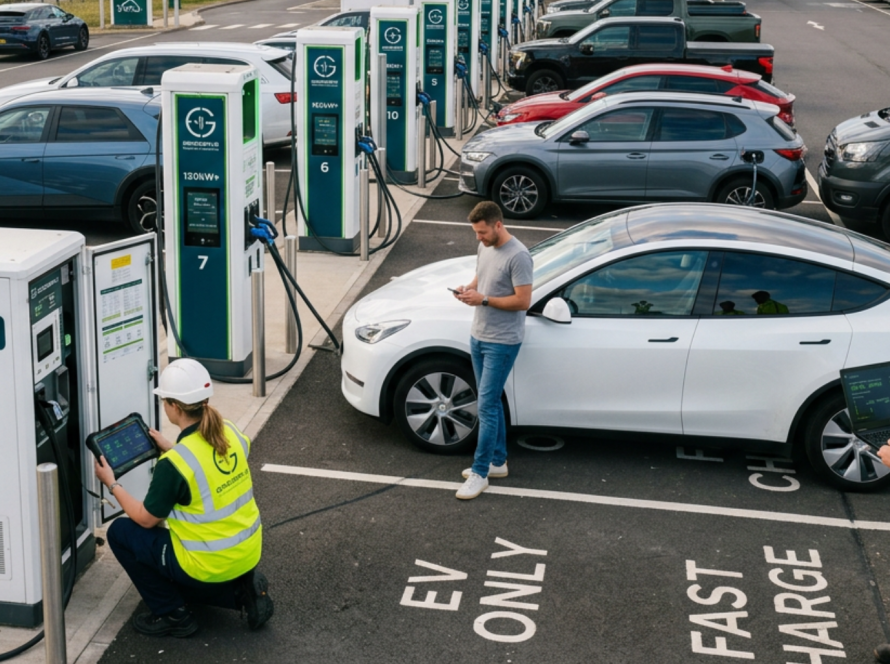
- Public charging facilities: Around 4.63 million units, up 36% year on year.
- Private charging facilities: Over 14.7 million units, up 57.8% year on year.
This split shows that while public charging is expanding steadily, the majority of growth is coming from private installations, particularly in residential and workplace settings. The faster growth of private chargers indicates strong consumer confidence in EVs and a growing preference for convenient, at-home or at-work charging.
Power Capacity and Charging Speed
The combined rated power of public EV charging facilities reached approximately 210 million kilowatts by the end of November 2025, with an average power of about 45.34 kilowatts per public charger.
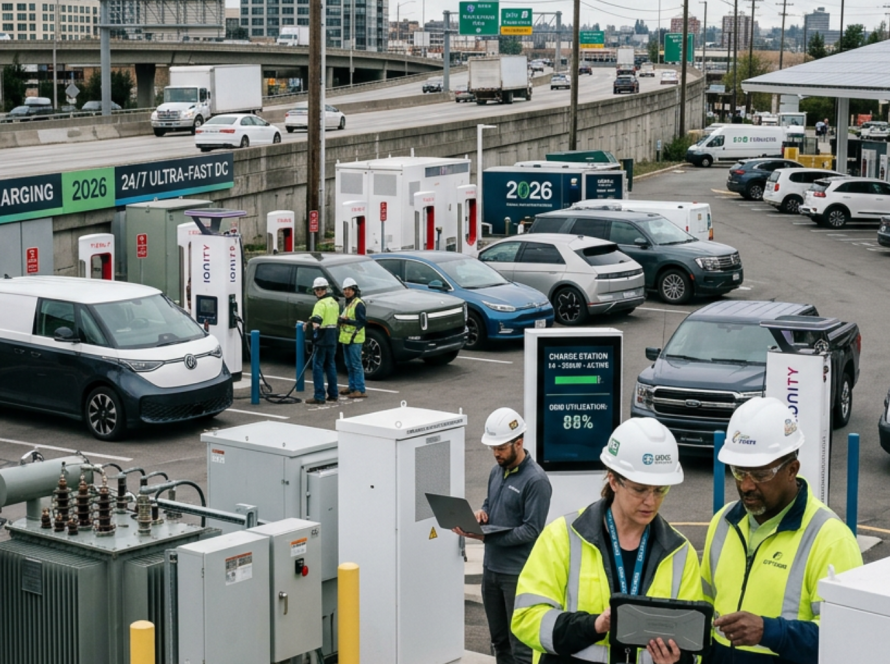
This level of power capacity supports a mix of AC and DC fast-charging stations, enabling shorter charging times and improving the user experience for both individual EV owners and commercial fleets. The continued deployment of high-power, ultra-fast liquid-cooled chargers in key cities and along major highways is helping to address range anxiety and support long-distance EV travel.
A Three-Year Action Plan for 2027
In October 2025, China unveiled a three-year action plan to further improve its EV charging infrastructure. The plan sets ambitious targets for the end of 2027:
- Establish a nationwide network of 28 million charging facilities.
- Ensure that public charging capacity surpasses 300 million kilowatts.
This roadmap underscores the government’s commitment to treating EV charging as critical infrastructure, similar to roads, power grids, and data centers. The plan is designed to:
- Ensure that charging availability keeps pace with EV sales.
- Improve coverage in both urban and rural areas.
- Support the electrification of commercial fleets, public transport, and logistics.
Strategic Implications for Industry and Policy
For executives in automotive, energy, infrastructure, and technology, China’s charging infrastructure growth offers several key insights:
- Scale and speed matter
China’s ability to deploy millions of charging points in a short period demonstrates the power of coordinated policy, state-backed investment, and strong collaboration between automakers, utilities, and charging operators. - Public and private charging must grow together
A balanced mix of public fast-charging stations and private, convenient chargers is essential for mass adoption. Companies should design their EV and fleet strategies around this dual-track model. - High-power charging is becoming standard
The focus on ultra-fast, high-power chargers means that future EVs and charging networks must be designed for higher power levels, better thermal management, and grid integration. - Grid integration and smart charging are critical
As charging demand grows, so does the need for smart charging, time-of-use tariffs, and vehicle-to-grid (V2G) pilots that turn EVs into flexible grid assets rather than just loads.
India’s evolving EV charging infrastructure and grid constraints read more
What C-Suite Leaders Should Do Next
For executives in the EV, energy, and mobility sectors, the rapid expansion of China’s EV charging infrastructure calls for:
- Aligning EV product and fleet strategies with the availability of fast-charging networks and high-power charging corridors.
- Engaging with charging operators and utilities to understand local charging capacity, grid constraints, and smart charging opportunities.
- Planning for grid-edge integration, including demand response, peak shaving, and V2G pilots, to turn EV fleets into value-creating assets.
- Monitoring policy and regulatory developments, especially national and regional targets for charging infrastructure, to anticipate market shifts and investment opportunities.
Looking Ahead
China’s achievement of over 19.3 million EV charging points by the end of November 2025 is a clear signal that the country is building the backbone of a fully electrified transportation system. With a clear three-year plan to reach 28 million charging facilities and over 300 million kilowatts of public charging capacity by 2027, the focus is now on quality, reliability, and smart integration.
For C-suite leaders, this rapid growth is both a benchmark and a call to action: the future of mobility is electric, and the companies that act now to understand and shape the charging ecosystem will be best positioned to lead in the next era of transportation.