EV Charging Infrastructure Has Reached Scale Public Perception Has Not
Despite significant progress in U.S. electric vehicle charging infrastructure, consumer perception continues to lag behind measurable reality. New national survey data indicates that concerns about charging time and driving range remain among the top barriers to EV adoption, even as infrastructure deployment accelerates at scale.
A recent poll conducted by the Associated Press, NORC Center for Public Affairs Research, and the Energy Policy Institute at the University of Chicago found that approximately 40 percent of U.S. adults cite charging time and driving range as major reasons for delaying or avoiding EV purchases.
From an infrastructure standpoint, those concerns are increasingly misaligned with current conditions.
Infrastructure Expansion Measurable Rapid and Strategic
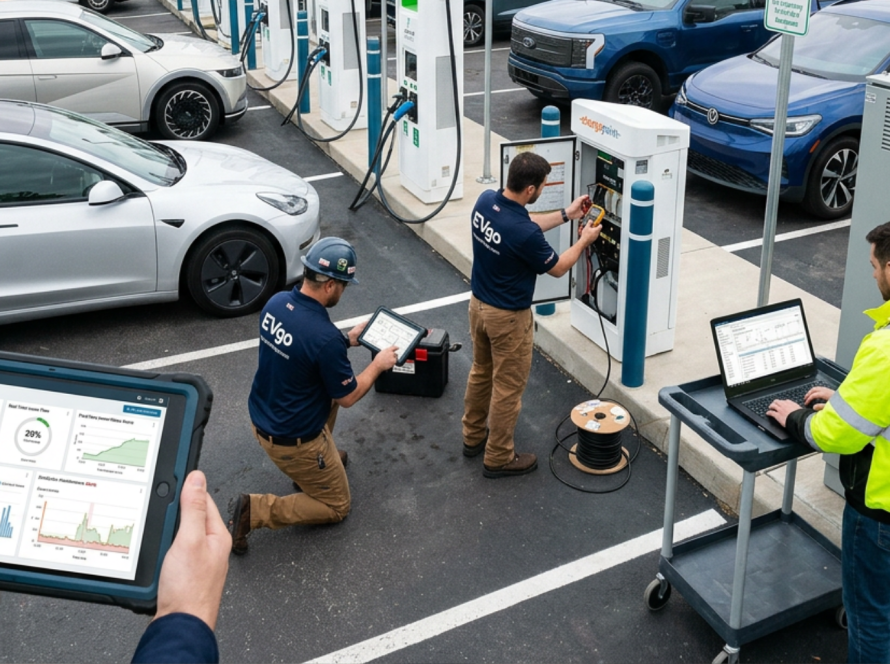
According to data from the National Renewable Energy Laboratory, more than 12,000 fast charging ports were installed within one mile of major U.S. interstates in 2025 alone. That single year deployment represents roughly 20 percent of all fast charging ports currently in operation nationwide.
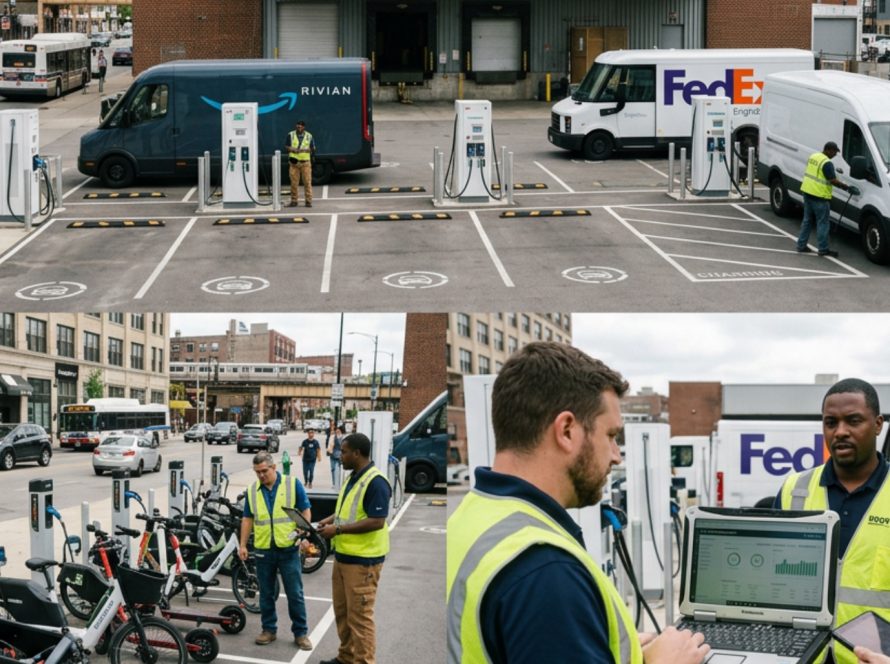
On key freight and travel corridors, coverage has reached a functional threshold.
Along Interstate 80, the longest continuous highway in the United States, drivers can now travel from New York City to Des Moines without encountering a stretch more than 10 miles from a fast charger.
Federal infrastructure funding has prioritized interstate corridors and rural connectivity, addressing historical gaps in long distance travel reliability.
From a planning and investment perspective, this marks a transition from early stage build out to network density optimization.
The Perception Gap Infrastructure Versus Awareness
While deployment metrics show material progress, public sentiment has not adjusted at the same pace.
EV drivers with extensive real world experience report that range anxiety persists largely as a legacy concern rather than a current operational limitation. Long distance EV travel, once considered a constraint, has become increasingly routine as charger density improves and trip planning tools mature.
This gap between infrastructure reality and consumer belief represents a communications and education challenge, not an engineering one.
Cost Remains the Primary Adoption Barrier
While charging concerns dominate public discussion, the data points to vehicle price as the most persistent friction point.
Only 20 percent of U.S. adults say vehicle cost is not a reason they avoid purchasing an EV.
Upfront pricing, rather than operating feasibility, now represents the largest hurdle to broader market adoption.
However, multiple lifecycle cost analyses continue to show that EVs are more energy efficient and lower cost to operate over time than internal combustion vehicles, particularly for drivers who charge primarily at home.
Daily Driving Patterns Favor EVs
Usage data further challenges prevailing assumptions.
According to AAA, most Americans drive 30 miles or less per day, a range well within the capabilities of even entry level EV models.
With fast charging infrastructure expanding along highways and urban centers, long distance travel has become more predictable and less disruptive.
Early adopter experiences suggest that initial concerns tend to diminish after first hand use, as charging behavior normalizes and planning becomes intuitive.
Strategic Takeaway
The EV market is no longer constrained by a lack of charging infrastructure along major corridors. Instead, adoption is increasingly shaped by consumer perception lagging behind infrastructure reality, upfront vehicle pricing dynamics, and policy driven deployment in rural and underserved areas.
For leaders evaluating investments, partnerships, or policy exposure tied to electrification, the data indicates a sector moving from build out to utilization, where education, pricing strategies, and network efficiency will define the next phase of growth.
State-led investments expanding fast-charging coverage read more