Charging Anxiety: Why EV Infrastructure Depends on Maintenance, Training, and Standards
The main obstacle to electric vehicle adoption is no longer range; it is reliability. As charging anxiety replaces range anxiety, the EV industry faces a new challenge: ensuring that drivers can depend on public chargers that actually work.
EV adoption is growing fast. Nearly one in ten new U.S. cars sold last year were electric or plug-in hybrid, and globally the number has surpassed 20 percent. Consumers are ready, automakers are investing billions, and the transition to electrification is underway.
The question is whether charging infrastructure can keep up. Vehicles now have longer range and better performance, but without reliable, well-maintained chargers, momentum could stall.
From Range Anxiety to Charging Anxiety
For years, the top concern among EV buyers was range, whether their car could travel far enough on a single charge. With most new EVs exceeding 300 miles per charge and some topping 400, that fear is fading. More than 80 percent of owners charge at home overnight, which further reduces range concerns.
The new fear is charging anxiety: uncertainty about whether a charger will be available and working when needed. It shifts focus from the car itself to the infrastructure that supports it.
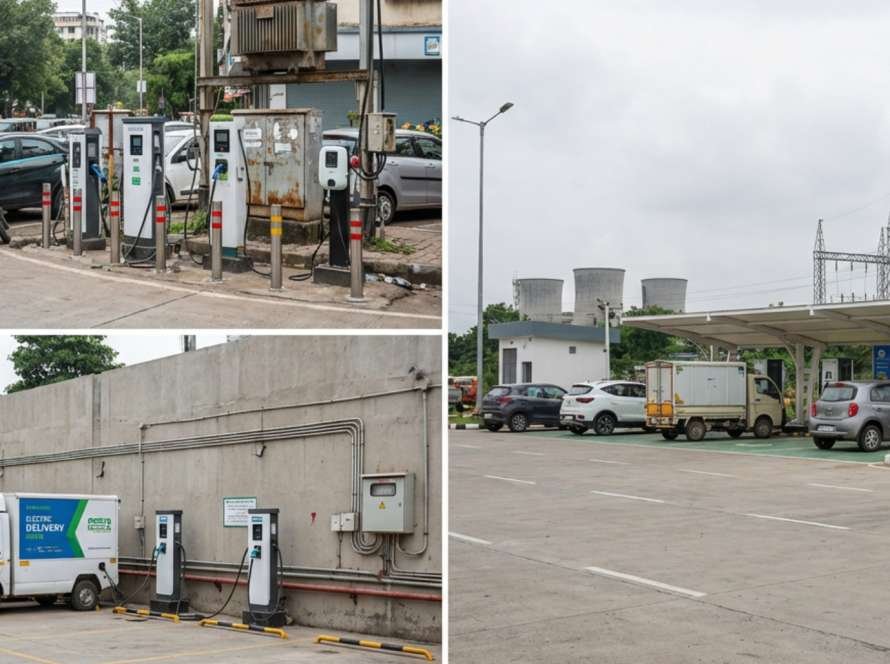
A 2022 study in the San Francisco Bay Area found that only 72.5 percent of public fast chargers with CCS connectors were functional. Common problems included broken cables, frozen screens, and payment failures. Nationally, J.D. Power’s 2025 report showed an 84 percent success rate for public charging attempts, meaning one in six fails.
No other part of the transportation system could operate with that level of unreliability. The U.S. federal NEVI program requires chargers receiving public funding to maintain 97 percent uptime, underscoring how far the industry must go.
The Reliability Gap
Tesla’s Supercharger network consistently ranks highest for reliability and customer satisfaction. However, since it primarily serves Tesla and select partner brands, it cannot alone carry the broader EV ecosystem.
To achieve mass adoption, reliability must become universal. Any driver, regardless of vehicle make, should be able to plug in anywhere and expect the charger to function. Initiatives like CharIN and ChargeX are advancing interoperability standards to make this a reality, but technical standards alone are not enough. The industry also needs strong maintenance practices and a skilled workforce to uphold these standards in daily operations.
Maintenance as a Reliability Strategy
Most charging downtime stems from preventable issues, which makes predictive maintenance crucial. Maintenance should balance three key elements:
Reactive maintenance responds quickly to vandalism, collisions, and unexpected failures.
Preventive maintenance uses scheduled inspections and system updates to prevent outages.
Predictive maintenance leverages data analytics to detect and fix problems before they cause downtime.
According to a Fluke survey, 36 percent of industry respondents listed maintenance as a major challenge, 44 percent cited inoperable chargers, and 40 percent mentioned software incompatibility. Another 88 percent identified a workforce skills gap, emphasizing how vital training is for maintaining high reliability.
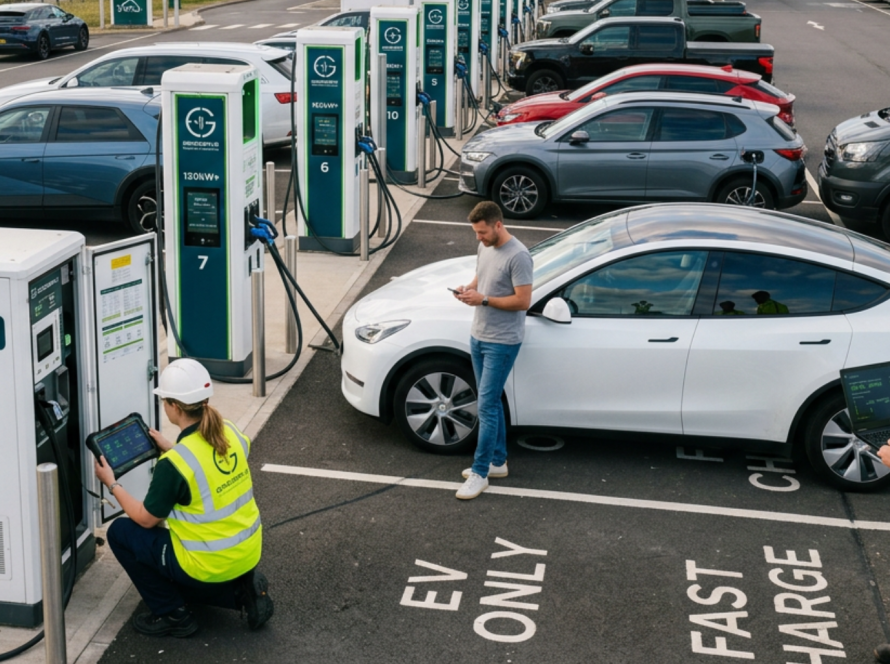
Routine preventive work should include remote monitoring, ground-fault and emergency-stop inspections, servicing of cooling and power systems, and payment testing. Firmware updates must also be managed carefully, with clear documentation to avoid unintended outages. Remote monitoring systems allow operators to diagnose problems before drivers experience them, improving uptime and reducing costs.
Standards and Tools
Servicing EV chargers demands technical precision and consistency. Technicians must be trained to OEM specifications, equipped with modern diagnostic tools, and guided by universal standards. Without that alignment, results vary, costs rise, and users lose trust.
Putting the expert in the box is an effective principle: embedding testing protocols and pass or fail criteria directly into diagnostic tools. This approach allows even entry-level technicians to verify compliance with safety and functionality standards. It reduces dependency on deep regulatory knowledge and helps bridge the skills gap by simplifying complex procedures.
When test instruments themselves enforce global best practices, the entire industry benefits from improved productivity, safer operations, and consistent service quality.
Building the Workforce
The backbone of reliable EV charging is people. Hardware, software, and AI tools cannot substitute for skilled technicians. Programs such as the Electric Vehicle Infrastructure Training Program (EVITP), supported by the International Brotherhood of Electrical Workers, have already certified more than 20,000 technicians, but the industry will need several times more in the coming decade.
As technology evolves, so do skill requirements. Higher charging speeds, smarter power systems, and advanced cooling solutions require continuous education. Ongoing certification and retraining must be integrated into every operator’s business model. Workforce development is not separate from infrastructure development; it is the infrastructure.
Aligning Incentives Through Service Agreements
Even the most skilled teams cannot deliver results without the right incentives. Service-level agreements (SLAs) ensure that reliability goals align across manufacturers, operators, and maintenance providers.
Well-structured SLAs define clear uptime targets, response times, and performance guarantees. They also promote transparency by requiring access to diagnostic data, error logs, and system metrics. When all stakeholders share real-time visibility, recurring issues can be identified and corrected before they affect users.
Such transparency should be a contractual requirement. Reliability must be built not only into hardware but into every agreement governing its operation.
Designing for the Future
Every new charging station should be designed with longevity in mind. That includes mandating ISO and IEC-certified equipment, Open Charge Point Protocol (OCPP) compliance for interoperability, properly documented firmware updates, and OEM-certified technician training.
Contracts should prioritize uptime rather than replacement, with warranties that reward reliability instead of minimal compliance. When service contracts and equipment warranties are separate, it ensures both accountability and alignment of incentives.
Decisions made during design and procurement directly determine whether a charger remains an asset or becomes a liability years later.
Why Uptime Matters
EV adoption ultimately depends on one simple factor: uptime. Every unavailable charger undermines public trust. Each failed charging attempt reinforces anxiety.
The industry has largely conquered range anxiety through better batteries and widespread home charging. Now it must conquer charging anxiety by treating maintenance, training, and standardization as core pillars of infrastructure.
When charging becomes as predictable as refueling a gasoline car, the electric transition will truly accelerate. Reliability is no longer a technical issue; it is the foundation of consumer confidence and the key to unlocking mass adoption.